
Human-centric Lighting
Innovators in Residential Healthcare
Join leading scientists and pioneering care home professionals to share best practice in lighting for residential care.
Published by LED professional ·
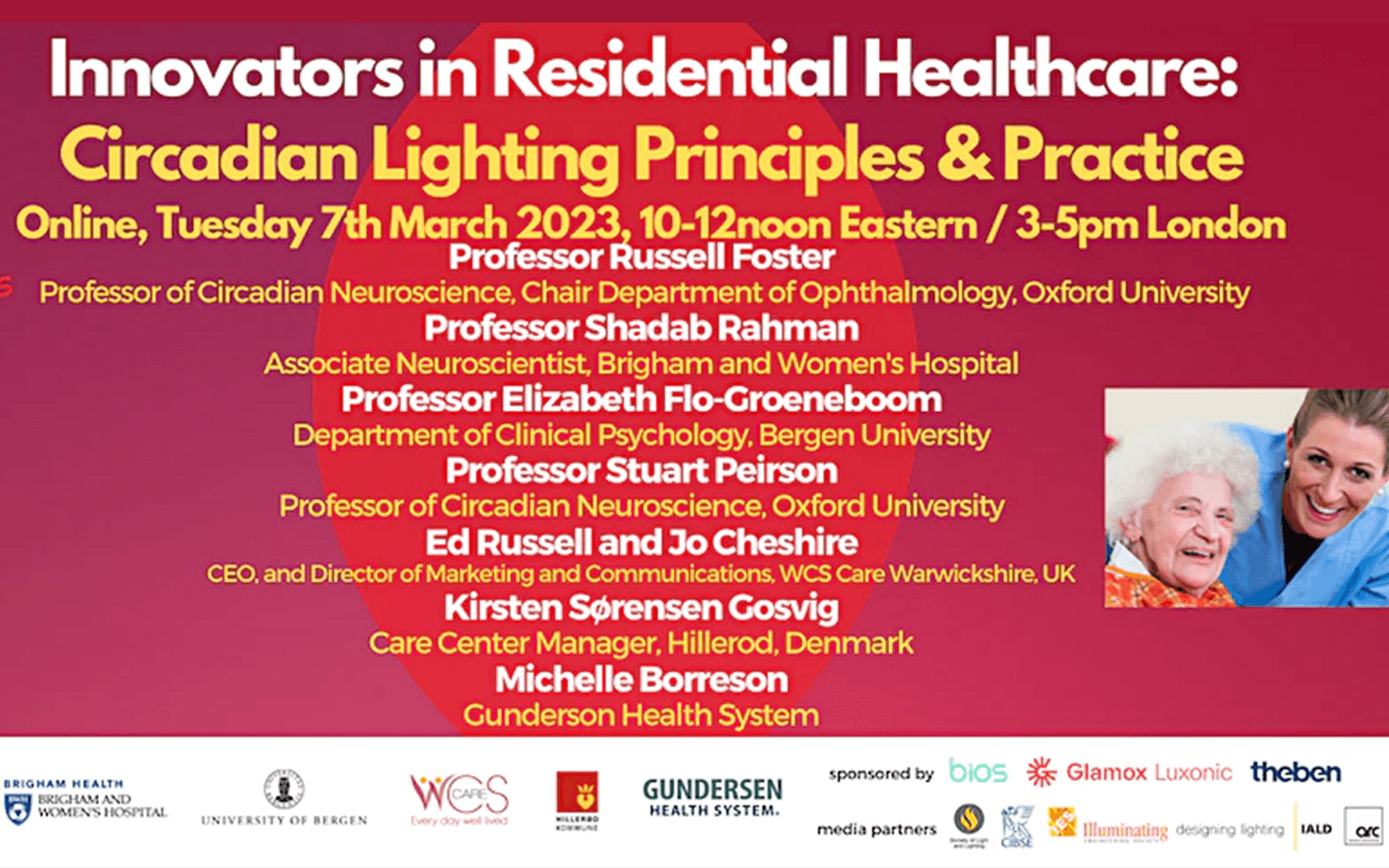
Tue, 7 March 2023; 15:00-17:00 GMT
https://www.eventbrite.co.uk/e/innovators-in-residential-healthcare-tickets-473414384167
The number of older people worldwide is projected to double from around 70 million today to over 1.5 billion in 2050, when the over 65’s will make up more than 16% of the population.
Dementia is currently the seventh leading cause of death among all diseases and one of the major causes of disability and dependency among older people globally. With nearly 10 million new cases every year, or around one every three seconds, this is placing growing pressure on a Residential Healthcare Sector that is already at breaking point. A recent survey of long-term care facilities in the USA found that 89% of nursing homes and 82 % of Assisted Living Facilities reported moderate or severe shortages.
In this context, there is an urgent need - and a compelling business case - for Residential Care Facilities that support the health and well-being of older people and provide healthy, happy workplaces for care staff.
Circadian lighting
Research suggests that lighting that actively supports a robust day-night (or ‘circadian’) cycle in older people with dementia can have significant benefits for sleep, mood and other issues such as falls, agitation and cognitive decline. This, in turn, creates a healthier and happier and more attractive workplace for staff.
Early adopters
A number of Healthcare providers around the world are adopting circadian lighting as part of an interdisciplinary approach to care. They report clear improvements in Resident outcomes, staff satisfaction and occupancy rates. The return on investment from energy-savings alone means that circadian lighting can be a compelling business proposition. Scientists are seeking new ways to study the health benefits in these complex settings.
The need
This forum brings together the scientists who are studying the principles and the healthcare providers who are seeing proof in the real world. It is for anyone passionate about the health and well-being of people living with dementia. It will be of special interest to professionals in the Residential Care, Lighting and Design communities who want to learn from the experts about principles and best practice and build their network. Scientists who want to engage the public with their research will also find this two-hour sessoin valuable.
Outline
Opening Remarks: Professor Russell Foster, Oxford University
Emerging science
- Falls - Professor Shadab Rahman, Brigham Women's
- Acute effects - Professor Elizabeth Flo-Groenberg, University of Bergen
- Evaluation - challenges and opportunities - Professor Stuart Peirson, Oxford University
Case studies
- UK - Ed Russell and Jo Cheshire, WCS Care,
- Denmark - Kirsen Sorensen-Gosvig, Hillerod
- USA - Michelle Borreson, Gundersen Health
Breakout rooms / discussion
Summary remarks and close




