Human-Centric Lighting
The Aging Eye and Its Influence on Melanopic Effects
Kevan Shaw, Lighting Consulting and Founder of KSLD.
As the owner and operator of a pair of significantly aging eyes I have a considerable interest in how this effects my visual and non visual relationship with light. As a lighting designer who has been active for 50 years, I have had the idea that yellowing of the lens degrades visual performance significantly heavily promoted. Also, the idea that simply increasing illumination levels is a panacea that universally improves vision for the aged eye is the only solution.
Published by LED professional ·
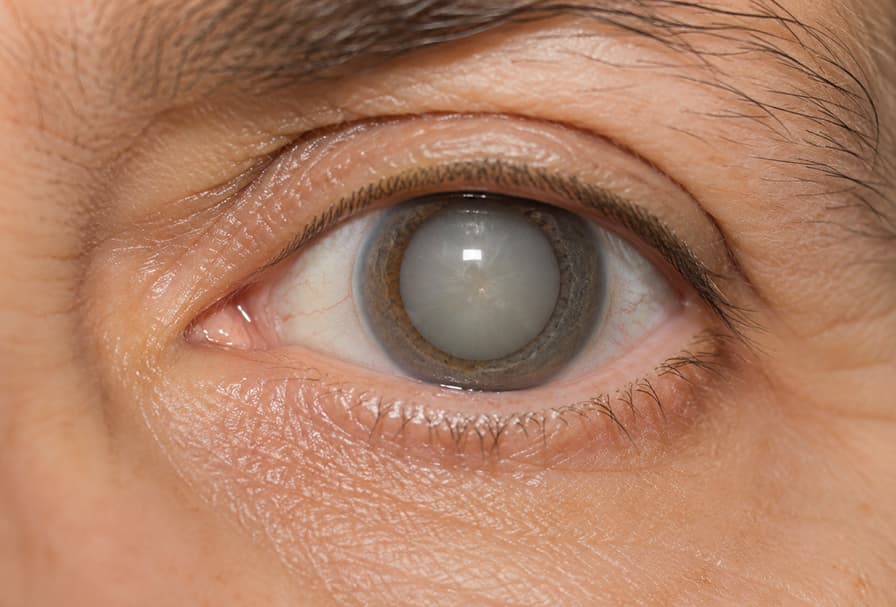
Now I am in my 70s I am happy to assert, from personal experience, that this is not the case. Yes, my vision has deteriorated, however, the problems include lack of focus accommodation (solution: Varifocal eye glasses), increased susceptibility to glare (solution: glare free lighting and reduced illumination levels,) the need for higher contrast in task lighting (solution: good directional lighting sometimes!) reduced visual acuity at low scotopic lighting levels (solution: phone torch!)
As I am keenly interested in non-visual effects of light, I am very interested in the potential effects of yellowing lenses on circadian entrainment and melatonin production. Accordingly, I have taken a look at a lot of academic papers in this field. Many papers have assumed there is a direct correlation between the reduced transmission in the action spectrum frequency for the iPRGC and the corresponding effects on melatonin suppression. Typically, these papers largely combine others’ work on these two separate areas and mash the results together. This results in restating the argument for more light and it being adopted in recommendations for provision of melanopically effective light including in DIN/TS 67600.
When people started to look at the situation experimentally things became rather more interesting. Many of these researchers started out to prove the theory that there was a direct correlation but came up with rather different outcomes.
One thing to consider when reviewing research in this field is that, typically, experimental methods rely on measuring melatonin in blood plasma, saliva or urine, at night typically after measuring the control melatonin level before any interventions. This has become the standard way of determining the impact of iPRGC influence. It must be noted that this can only be an indicator of effectiveness of any particular experimental intervention. If we are really interested in the effectiveness of any non-visual lighting effects it is absolutely necessary to conduct follow up studies. These are needed to see what, if any, impact the particular intervention had on long term sleep patterns, daytime alertness, feelings of wellbeing and by implication the actual circadian effects. Such studies are not lab-based experiments but are well in the territory of social psychology to gather subjective experiences for the participants.
Some papers in the area of the aging eye stand out for their results and conclusions:
Two papers by Raymond Najjar separated by 9 years (2014 and 2023) have identified a nonlinear correlation between lens transmission and melatonin suppression. The second endeavors to understand why. Najjar discovered that the peak spectral response moves from 483 nm to ~500 nm. The conclusion being that the S-Cone and M-Cone receptors are contributing to the melatonin suppression in older individuals. It is expected that visual receptors in the eye would influence iPRGC responses, after all, the visual receptors are connected to retinal ganglion cells that transmit information to the visual cortex, the Intrinsically Photosensitive Retinal Ganglion cells are noted for connecting information to the Superchiasmatic Nucleus but will also have connections to visual receptors. The relationships are not fully understood yet particularly in the human eye.
An interesting study by Tomo Nishi in 2020 looks at the effects of cataract surgery where the lens is replaced by a clear or slightly yellow acrylic replacement. In this case the yellowing and reduction in transmission of the normal aging lens is removed with the cataracted lens. This study was carried out over 169 subjects, although this was still considered a small group. The conclusion to this study was that post operatively, after 3 months, an increase in measured melatonin in blood over the preoperative condition was observed in all patients but no difference was shown between those implanted with yellow lenses and those with clear lenses.
My consideration is that the improvement in melatonin levels can possibly be ascribed to the removal of the cataract caused changes in the eye rather than removal of the yellow aged lenses. There is also a confounding factor in that the 3-month time lapse in measurements also crossed distinct seasonal boundaries with consequent changes in natural light exposure that could be, in part, responsible for increased melatonin production.
A paper by Marina Giminez from 2016 looks at this same issue with a much smaller cohort. This concludes that there was no significantly measurable permanent change in melatonin production after cataract surgery. Any short-term change disappears after 12 months post operation. This team also experimented with orange contact lenses in a group of young people simulating the aging of the lens. After 2 weeks there was an increased melatonin measurement ascribed to increased sensitivity due to adaptation to the lenses but no observable change to sleep or melatonin rhythms between the experimental conditions.
Posterior chamber intraocular lens (IOL), 18.5 D, overall length 13 mm, optic diameter 6.0 mm. Photograph: Frank C. Müller, Baden-Baden. This file is licensed under the Creative Commons Attribution-Share Alike 3.0 Unported license. <https://commons.wikimedia.org/wiki/File:Hinterkammerlinse_01_(fcm).jpg>
It is notable that other studies on cataract removal patients have reported immediate, post-operative increases in measured melatonin in blood or urine samples, however these have lacked any longer term follow up studies. Of course this does reinforce the rather simplistic expectation that yellowing of the lens will reduce the response of the iPRGC as expected by the researchers.
Anecdotally, people who undergo cataract surgery report brighter and clearer vision and some color disturbance immediately after the surgery however this experience doesn’t persist and ‘normal’ vision returns after a couple of weeks. Clearly the visual cortex is accommodating the changed information from the eye returning to its learned model of the visual environment. It would seem that the non-visual effects are equally being adapted to a normal expectation in the Superchiasmatic Nucleus.
Where do we go from here? Well, I think the idea that you automatically provide higher levels of illumination for older people is highly flawed. Certainly for non-visual effects there is no properly researched answer to what provision you should make for the older eye and given the susceptibility to discomfort glare, designing integrative lighting for older people needs very careful handling. There is no doubt that lighting to improve circadian entrainment is very beneficial for older people who generally tend to have poorer sleep patterns. Also care homes and sheltered accommodation are prime projects to consider lighting for non-visual effects as the people living there will be spending more of their time indoors and in an environment where timing of lighting and exposure limits can be more effectively controlled.
Generally, we also need to look at the research methods for non-visual lighting. As mentioned, looking for changes in melatonin levels in blood, urine, or saliva are only indicating limited information that can be overly extrapolated. This inevitably relates to sleep onset or sleep phases when our real interest is in the circadian effects during the working and leisure hours of the day. So far we have not determined specific biochemical indicators for all phases of the circadian rhythm and are reliant on subject reported effects on mood and sleep. We can measure activity and some aspects of performance such as task speed or accuracy. We really do need to undertake more research in the field, in real, live projects to refine our knowledge and inform our design process to develop optimized lighting for heath , wellbeing and the visual environment.
Currently the best knowledge we have is in the Manchester group paper of 2022. These recommendations are being adopted in a number of lighting standards including WELL ISO/CIE 8995-1:2005 Lighting of Workplaces, DIN/TS 67600 Complementary Criteria with Regard to Non-Visual Effects of Light and IES RP-46, Supporting the Physiological and Behavioral Effects of Lighting in Interior Daytime Environments. At least if we all follow these recommendations we have a common basis for any anecdotal or subjective research in the future and can be assured we are providing some benefit and not likely to be causing any harm.
Kevan Shaw was born and raised in Edinburgh, Scotland. He graduated from Loughborough University of Technology with a B.Sc. in Economic and Technological History and Social Psychology in 1975. He began his career as a lighting designer for rock bands including Jethro Tull, Ultravox, XTC, and Steve Hackett.
In 1989, Kevan returned to Edinburgh to establish Kevan Shaw Lighting Design, specializing in architectural and exhibition lighting. Over the next 35 years, the practice completed more than 800 projects under his leadership before his retirement in 2024. As part of a planned succession, the firm was acquired by EFLA Engineering in 2018 and continues to deliver innovative, high-quality lighting design.
Kevan has long been committed to advancing the lighting design profession and remains at the forefront of developments in the field. A recognized industry thought leader, he continues to support the profession through the International Association of Lighting Designers (IALD), where he serves as an elected director and Chair of the European Regulatory Affairs Committee.
In 2018, Kevan was inducted into the IALD College of Fellows in recognition of his contributions to the art and science of lighting design and his dedicated service to the association. He was named Lighting Designer of the Year at the 2013 LUX Awards and received the inaugural Lifetime Achievement Award at the 2018 LIT Lighting Design Awards.
Today, Kevan continues to provide specialist consulting services to EFLA | Kevan Shaw Lighting Design while enjoying more time to pursue his lifelong passion for steam engines and new adventures.
Note: This article was published in LEDprofessional Review (LpR), Issue #116.