
Smart Lighting
LumenRadio has Launched W-DALI – a New Wireless Alternative to the DALI Cable
Through innovative wireless technology, W-DALI replaces the conventional DALI cable for lighting. W-DALI gives customers wireless control of large-scale lighting systems and opens up new opportunities for lighting design, energy optimization and the modernization of older buildings.
Published by LED professional ·
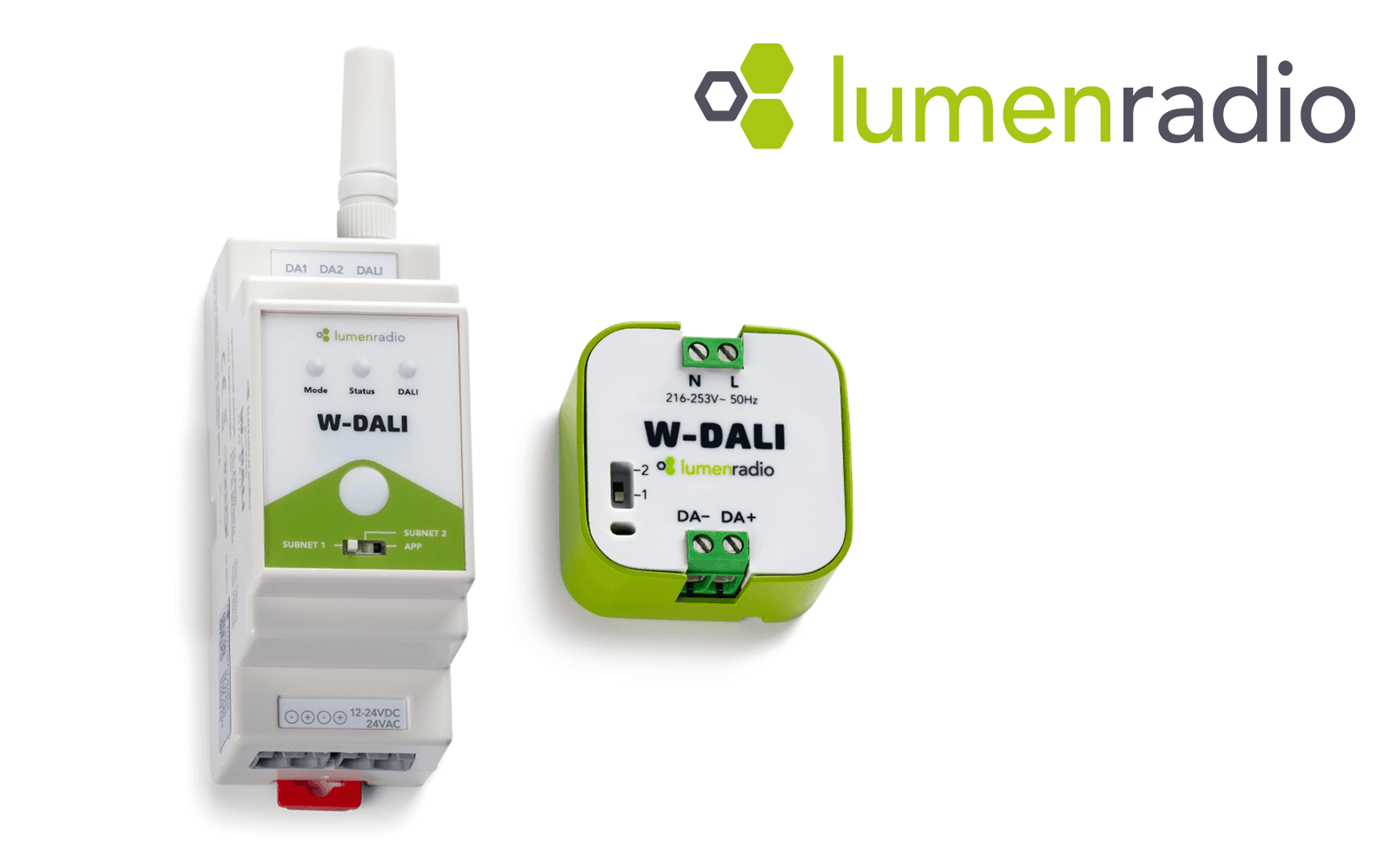
By being a completely transparent DALI solution, W-DALI eliminates the need for extensive construction work, which generates benefits including simpler project planning and reduced installation costs.
“This is a game-changer for commercial interior lighting,” says Niclas Norlén, Head of Product Development at LumenRadio. “With no need for any rewiring, W-DALI gives you an instant wireless lighting network which is quick and easy to install. For our customers, this represents a great cost saving, particularly when it comes to upgrading older wired DALI lighting systems, which is the predominant lighting standard in buildings.”
“W-DALI is built on LumenRadio’s patented wireless technology which provides unmatched reliability of performance. It doesn’t interfere with or allow itself to be compromised by other wireless networks,” adds Niclas. “In other words, you can use wifi, Bluetooth or the equivalent in the same area without a drop in communication quality.”
An energy-efficient response to climate goals
“The potential for our wireless products and modules, which replace traditional cables, is huge,” says Alexander Hellström, CEO of LumenRadio. “This is particularly true for W-DALI since the need to retrofit and modernize existing buildings, such as schools, hospitals and hotels, is growing as the EU demands greater energy efficiency within the building sector.”
Buildings account for over one third of CO2 emissions in the EU and of those built before 2000, 75% are deemed to have a poor energy performance. Through its revised Energy Performance of Buildings Directive (EPBD), the EU wants to increase the rate of renovation and make buildings more energy efficient. The aim is to reduce emissions and fully decarbonised building stock by 2050 in an effort to meet the EU’s wider energy and climate goals.
It’s DALI, just without the cable
“We’ve developed a solution which operates with any DALI controller,” says Niclas. “Commissioning remains the same but you get a quicker and simpler alternative to running DALI cables – with all the advantages of wireless control.”
Via the wireless network, users can remotely control and monitor lighting fixtures, adjust brightness levels, set scenes, and create schedules or zones for efficient energy management. W-DALI is DALI-2 certified.
As well as wireless products for DALI, LumenRadio offers wireless technology for Modbus, BACnet, M-bus and DMX.
W-DALI can currently be bought in Sweden via LumenRadio’s distributors, Ahlsell and Bellalite.
Summary
- LumenRadio has launched W-DALI – a wireless solution for indoor lighting control which removes the need to install new DALI cables
- Uses the same language as the DALI cable protocol but communicates wirelessly
- With no construction work required, W-DALI cuts installation costs and complexity
- Opens the door for retrofit projects in historical buildings which cannot be altered structurally
- Enables remote control and monitoring of lighting fixtures for more efficient energy management in buildings




