
Organizations
Google Acquires MicroLED Startup Raxium
Google LLC has big ambitions in the augmented reality business, if reports that it has just paid $1 billion to acquire a startup called Raxium are to be believed. The Information, which broke the story, said Google’s acquisition of Raxium is a sign that it’s seriously focused on building the…
Published by LED professional ·
by MIKE WHEATLEY, siliconANGLE
“Google has struck a deal to buy Raxium, a five-year-old startup that develops tiny light-emitting diodes for displays used in augmented and mixed reality devices,” The Information said. The deal has not been officially confirmed by either company, though the report adds Google is also looking at more acquisitions related to AR headset components.
Raxium is a startup based in Fremont, California, that develops MicroLED displays used in AR headsets and other devices. MicroLED is an emerging technology that holds a lot of promise, but it’s currently limited to extremely expensive, large-sized screens, such as wall-mounted signage.
MicroLED is inorganic, similar to LCD displays, but it’s supposed to have OLED qualities such as high brightness, good color fidelity and high contrast. But the most important aspect of MicroLED is its energy efficiency, which is a key requirement of wearable devices such as headsets.
Raxium, which has yet to launch any product, has reportedly come up with a more efficient manufacturing technique for MicroLED that may reduce production costs.
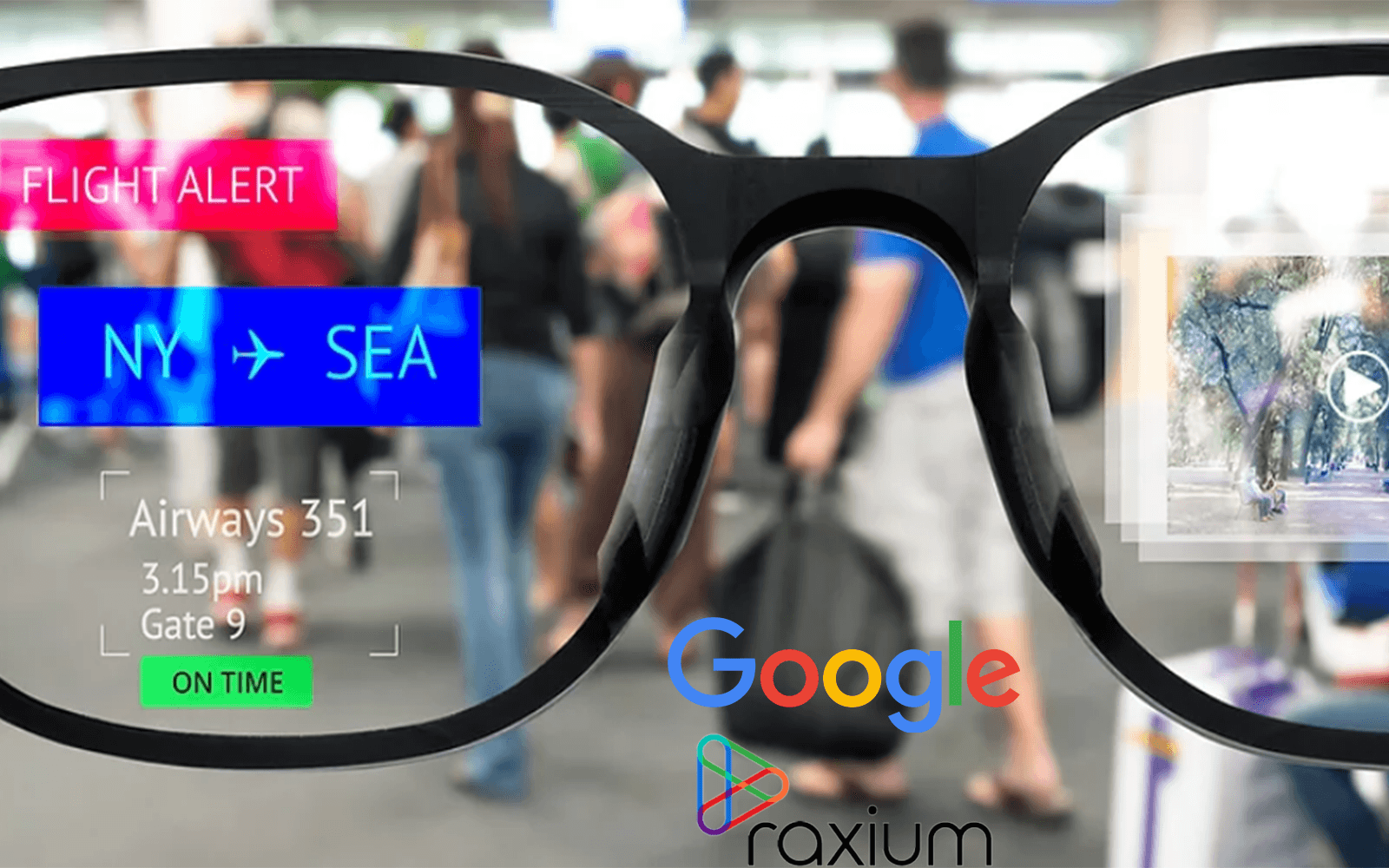
The Information said Google is buying Raxium so it can integrate its MicroLED displays with its latest AR headset. It’s believed that Google is currently working on such a device, codenamed Project Iris, and hopes to ship it sometime in 2024.
Pund-IT Inc. analyst Charles King told SiliconANGLE that the Raxium deal plays into Google’s longer-term efforts around AR.
“Remember that the company was one of the first vendors to enter the space,” he noted. “But what’s less known is that after the controversial launch of Glass as a consumer device, Google shifted its focus on AR to workplace solutions and has notched a series of important wins in areas, including healthcare, since then.”
That means it’s likely Google is less interested in the metaverse narrative than “how the acquisition might improve and push forward Google’s broader, business-focused AR strategy,” he added. “If Raxium’s display technology is as good as the rumored $1 billion price suggests, it could be a very big deal for Google and a wakeup call for its competitors.”
Google is no newcomer to AR. It was in fact one of the first companies to attempt a consumer-grade AR gadget with Google Glass, only to shelve the idea after receiving strong backlash, with beta testers receiving the harsh nickname “glassholes.”
However, Google Glass eventually found its call in the enterprise. Nowadays, with the rise of concepts such as the metaverse, consumers are more open to wearing glasses and headsets and experiencing virtual worlds.
Earlier, in 2020, Google acquired Canadian smart glasses startup North Inc. through a deal reportedly valued at $180 million. The transaction bought Google a technology developed by North that uses a laser projector attached to the frame of an AR headset to display content for users. That technology could also prove useful for any AR headset it might be working on.
Google clearly doesn’t want to be left behind. One of its main rivals in the AR space will be Meta Platforms Inc., the parent company of Facebook, which is said to be working on a new device called Project Cambria, in addition to its existing Quest 2 virtual reality headset. Apple Inc. is also said to be working on a mixed-reality headset and a pair of AR glasses. Both companies have made acquisitions of AR startups in recent years.
___




