
Testing
Fraunhofer – A New Solar Simulator to Test PV Modules
To pave the way for the industrial implementation of highly efficient perovskite-silicon PV modules, the tandem solar cells and modules must be reliably measured. Only then is it possible to make objective comparisons between different cells and modules and to make technological improvements. In…
Published by LED professional ·
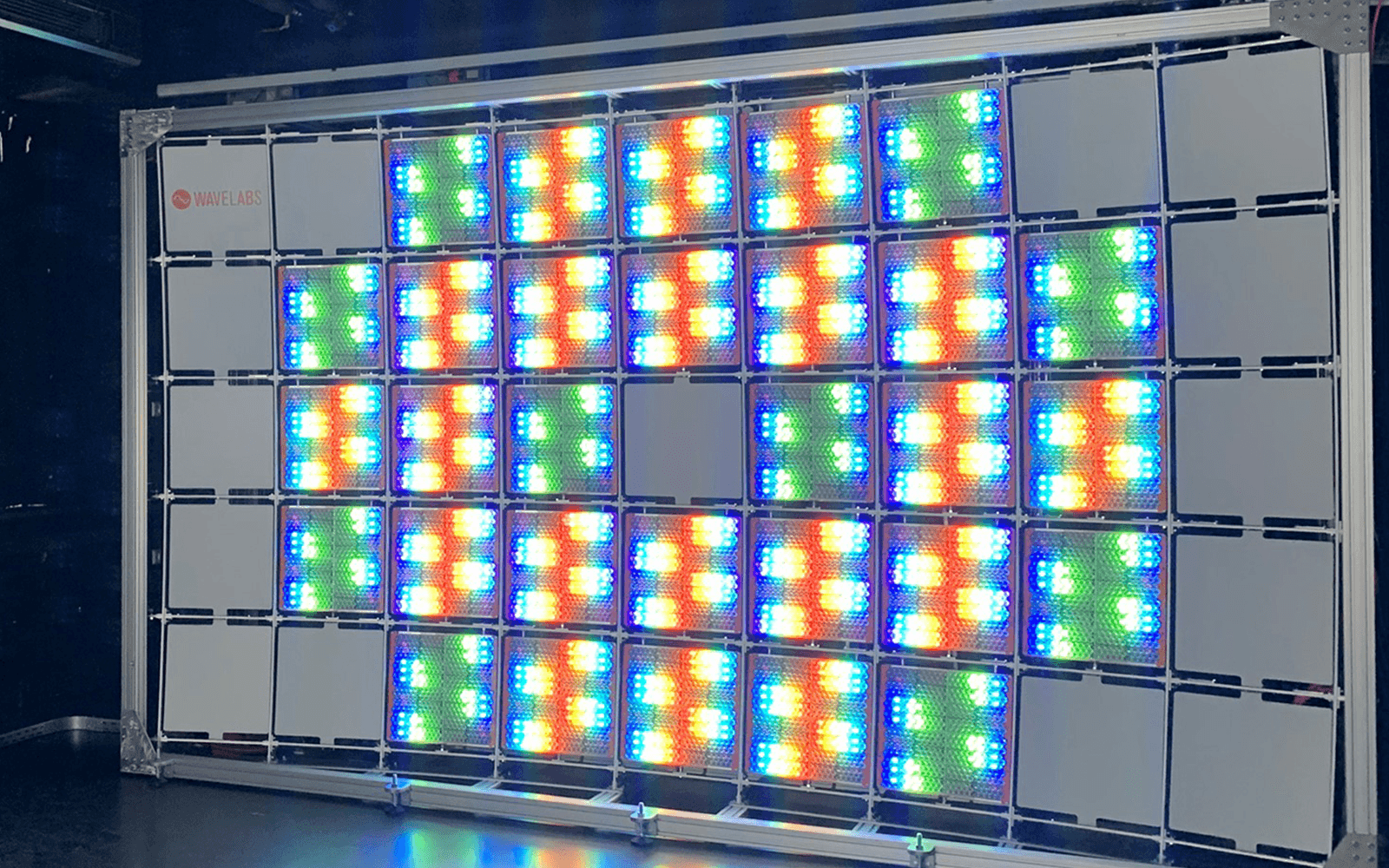
Preparations for the industrial production of perovskite-silicon tandem solar cells and modules are already underway worldwide. "It is important to provide highly precise and reproducible measurements for this emerging technology as soon as possible so that there can be objective competition," says Prof. Dr. Stefan Glunz, Division Director for Photovoltaic Technologies at Fraunhofer ISE.
To be able to measure perovskite tandem modules, a comprehensive understanding of the contained solar cells is required. Dr. Martin Schubert, project head at Fraunhofer ISE, explains: "All cell layers must be irradiated by different light sources under conditions that imitate - as exact as possible - those under in sunlight in order to make reliable statements about the efficiency of the entire cell and module.
The new solar simulator in the CalLab PV Modules of Fraunhofer ISE, which has been completed for calibration, now makes this possible: It measures lab-scale perovskite-silicon PV cells with an area of 5 by 5 millimeters up to PV modules of 2.40 by 1.30 meters. The very large wavelength range of the simulator, ranging from 320 to 1650 nanometers is due to 28 different spectrally adjustable light channels distributed over 40 light sources with a total of 18,400 LEDs. This forms the basis for the test procedures developed by the researchers for perovskite-silicon tandem technology. The solar simulator also enables the characterization of multi-junction solar cells and modules made of other materials.
"The new solar simulator is a milestone towards a standardized calibration procedure for perovskite-silicon tandem modules. During its construction, we had to ensure that the LED illumination homogeneously irradiates the modules over the entire surface and that their light spectra can be adjusted so that all cell layers are realistically activated," says Falko Griehl, project manager for the SINUS-3000 Advanced solar simulator at Wavelabs. "With this technology, beyond the standard spectra, we can also simulate light at arbitrary times of day and regions, which allows this influence on tandem modules to be analyzed." From 2024, the heat generated by the longer illumination times during module characterization will be compensated by a climate chamber, in which the tandem PV cells and modules will be placed for measurement.
Perovskite solar cell pioneer and manufacturer Oxford PV is an associate partner in the Katana project. Dr David Bushnell, Oxford PV’s Test and Measurement Department Manager, said: “The development of a new calibration capability for accurately determining the performance of perovskite-on-silicon cells and modules will enable high-quality independent measurements of this breakthrough technology. We are pleased to be supporting the wider PV community by helping to fund this project.”
For the characterization of perovskite-silicon tandem solar cells and modules, the classic flash simulators, or flasher, from silicon photovoltaics cannot be used without further ado, since flashers cannot variably adjust the light spectrum that the tandem cells convert into electricity. Furthermore, the illumination time by a flasher is too short to account for the effects between the sub-cells. For the metastable behavior of perovskite technology, the solar cells and modules must be tested under continuous light. Until now, the efficiency of perovskite-based tandem modules had to be measured in complex and weather-dependent outdoor tests.




