
Human-centric Lighting
deLIGHTed Talks: Good Light – Good Life in Wintertime, November 3, 2021
The Good Light Group, together with the Society for Light Treatment and Biological Rhythms (SLTBR), the Daylight Academy (DLA), the International Association of Lighting Designers (IALD), and Luger Research (LR), are organizing and presenting the “Good Light – Good Life” lectures. The webinar…
Published by LED professional ·
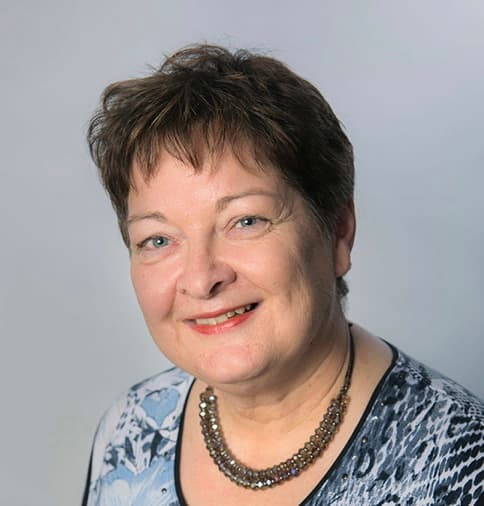
MODERATION: Dr. Marijke C.M. Gordijn
Marijke is founder/ CEO, shareholder and senior scientist of Chrono@Work and guest researcher at the chronobiology department of the University of Groningen, The Netherlands. After finishing her Masters in Biology, she worked for more than 25 years as a scientist specialised in human chronobiology and sleep. She completed her PhD at the department of Psychiatry at the University Medical Center Groningen on the topic of the role of the biological clock and sleep in mood regulation. In 2012, she founded Chrono@Work to improve the application of fundamental chronobiological knowledge in society. Marijke is currently president of the Society for Light Treatment and Biological Rhythms and co-founder/board member of the Good Light Group.
PROGRAM
15:00 Introduction: Program and speakers by Marijke Gordijn
15:05 "Why shifting to daylight saving time is a bad idea."
by Prof. Till Roenneberg. For more information see below...
15:20 "Dim days and long nights: Optimising light exposure during the dark period of the year."
by Dr. Manuel Spitschan. For more information see below...
15:35 Panel Discussion: incl. Q&A
Why is it such a bad idea to shift the clock twice a year?
Worldwide, experts in biological clocks and sleep agree that the optimal time during winter is one where there is more morning light and less evening light. Why this is the case, will be clearly presented by our esteemed guests today. During the panel discussion, it will be possible to ask questions, and discuss the choice for the most optimal time in your time zone. If you want to know more about daylight saving time, standard time, the biological and social clocks, and the role of light for our well being and health, this is the place to be. Please feel welcome to join this panel discussion, irrespective your own ideas and opinions, and discuss all aspects of clocks and time.
16:00 End
SPEAKER
Prof. Till Roenneberg
Education
1973-1979 Physics Medicine and Biology (LMU Munich), graduation (Diploma) in zoology, genetics and biochemistry; 1980 Neuroscience of colour vision, University College, London; 1983 Graduation (Dr.rer.nat); 1993 Habilitation (Dr. med. habil.).
Scientific Positions
1979-1982 Research assistant, Medical Faculty LMU Munich; 1982-1985 Post-Doctoral period with Prof. J. Aschoff; 1983-1985 Lecturer, Medical FacultyLMU Munich; 1985-1988 Postdoc (J.W. Hastings), Tutor, Teaching Fellow and Research Associate, Harvard; 1988-1993 Assistant Professor, Medical Faculty LMU Munich; 1989-1995 Visiting Scholar, Harvard; 1993-2001 Associate Professor, Medical Faculty LMU Munich; 1996-2002 Coordinator DFG-Center (Schwerpunkt); 2001 full Professor, Medical Faculty, LMU Munich; 2001 Head of the Munich Centre for Chronobiology; 2002-2005 Director of the clinical education "Nervous system and Behaviour", Medical Faculty, LMU Munich; 2005-2007 Chair Gordon Conference for Chronobiology; 2005-2009 Chair of the research network "ClockWORK" (Daimler-Benz-Foundation); 2005-2011 Chair of the EU 6th Framework Programme (“EUCLOCK”); 2008-2012 Department Chair (Institute for Medical Psychology, IMP, Medical Faculty, LMU Munich); 2011- President of the World Federation of Chronobiological Societies; 2012-2015 President of the European Biological Rhythms Society; 2012-2019 Department Vice-Chair (IMP); 2012; Visiting Professor Universidade Federal Rio Grande del Sul, Porto Alegre, Brasil; 2016-2019 Visiting Professor University of the Philippines, Manila, Philippines; 2018 Visiting Professor University of Padua, Italy; 2020 Visiting Professor Northwestern University, Chicago; 2020-Senior Research Associate Institute and Polyclinic for Occupational-, Social- and Environmental Medicine, LMU Munich; 2021- Visiting Professor Oxford University.
Publications
More than 200 scientific publications and two books; Impact Factor: >1,000; >20,000 citations; H- index: 66; > 400 invited talks.
Awards and Prizes
1987 Harvard-Hoops Prize for "Excellence in Teaching”; 1993 Honma Prize of the University of Sapporo for "Outstanding contributions to the field of chronobiology”; 1998 "Aschoff's Ruler" - Research Prize; 2004 Die "Rose des Kurt-Huber-Gymnasiums”; 2004 Silver Medal of the University of Munich for outstanding achievements in teaching; 2011 Professional Lighting Design Recognition Award for Research and Education; 2013 Science Book award of the British Medical Association Board for the Public Understanding of Science; 2016 Italian Science Book prize (Premio letterario Galileo 2016); 2018 Innovation in Academia Award (University of Kent); 2019 Honorary member for live of the Working Time Society; 2019 German Sleep Foundation Award: “Ambassador for Sleep”
LECTURE: "Why shifting to daylight saving time is a bad idea."
Many regions and countries are reconsidering their use of Daylight Saving Time (DST) but their approaches differ. Japan, for example, is thinking about introducing transitions to DST, while others want to abolish the switch with different solutions: California wants DST all year round and the EU still debates between that and constant Standard Time. DST and circadian biology are equal discussions to which time zone a country, state or region should belong: the US state Massachusetts is considering switching to Atlantic Standard Time, i.e., moving the timing of its social clock (local time) 1 h further east (which is equivalent to perennial DST), and Spain is considering leaving the Central European Time to join Greenwich Mean Time (GMT), i.e., moving its social timing 1 h further west. A wave of DST discussions seems to periodically sweep across the world. Although DST has always been a political issue, it is important to understand the biology associated with these decisions because the circadian clock plays a crucial role in how the outcome of these discussions potentially impacts our health and performance. In this talk, I give the necessary background to understand how the circadian clock, the social clock, the sun clock, time zones, and DST interact.
SPEAKER
Dr. Manuel Spitschan
Dr Manuel Spitschan is a University Research Lecturer at the University of Oxford. After studies in psychology at University of St Andrews in Scotland (UK), he completed his PhD at the University of Pennsylvania (US). Following a post-doctoral fellowship at Stanford University, he joined the Department of Experimental Psychology in Oxford in 2017. His research focuses on the visual and non-visual effects of light on humans and how to study them in lab and field. In addition to his research activities, he is a member of the Daylight Academy, the immediate past Chair of the OSA Color Technical Group, and active in two CIE Technical Committees. In 2022, he will start a Max Planck Research Group at the Max Planck Institute for Biological Cybernetics in Tübingen (Germany), with a joint appointment as Assistant Professor at Technical University Munich.
LECTURE: "Dim days and long nights: Optimising light exposure during the dark period of the year."
Light impacts on our physiology and behaviour. Over the past few years, the scientific community has learned a lot about the biological mechanisms in our eye and brain that underlie these “non-visual” functions. While laboratory studies have elucidated these mechanisms, an important step for translation is understanding the role of real-world light exposure. Furthermore, it is important to develop novel and effective ways to communicate the underlying biological complexity. In this talk, I will describe recent work that will help us use the best scientific evidence to promote biologically appropriate light exposure.
___




