
Optics
Optical Components with a Lower Carbon Footprint
BWF Profiles uses PLEXIGLAS® proTerra M5 containing recycled material for high-quality optical components in luminaires.
Published by LED professional · · Updated
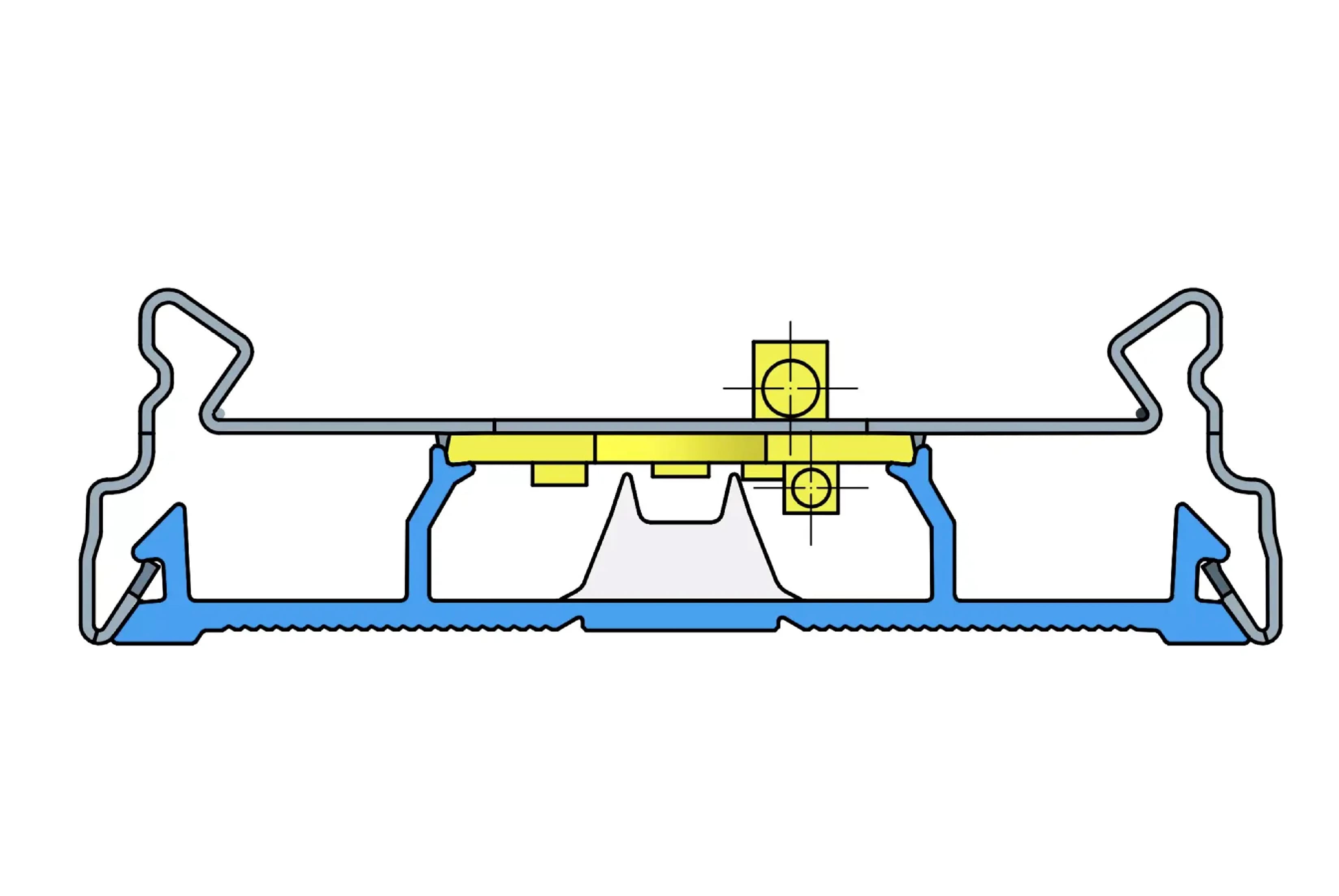
Sustainable luminaire design is a multifaceted standard which can be broken down to the manufacturing process of every single luminaire. Although the use of recycled material is a resource-efficient option, it reaches its limits for lenses and light covers as these require recycled materials with flawless optical properties. One such material is PLEXIGLAS® proTerra M5, a molding compound from Röhm containing recycled polymethyl methacrylate (PMMA).
By making an optical component for the lighting manufacturer RIDI using this material, BWF Profiles, a leading manufacturer of high-quality plastic profiles for the lighting industry, has proven that it is practical for parts such as this. BWF Profiles uses PLEXIGLAS® proTerra M5 to produce a continuous-row lighting system for a concept study on the RIDI LINIA EVO system, which was presented at the leading trade fair Light+ Building 2024 as an example of sustainability.
Sustainable molding compound with recycled material
“Our PLEXIGLAS® proTerra M5 molding compound contains up to 30 percent mechanically recycled PMMA from post-industrial sources, which is mixed with new PLEXIGLAS® in a controlled manner. This reduces the material’s carbon footprint by 30 percent compared to new material,” explains Christian Bitsch, Senior Market Tech Consulting Manager in the Molding Compounds business unit at Röhm GmbH.
Decision in favor of the circular economy
Lighting manufacturers and their suppliers strive to produce in an environmentally and climate-friendly manner, as sustainability has become an established market demand. “At BWF Profiles, the processed materials alone account for nearly 80 percent of the company’s carbon footprint,” says Nico Sonntag, Materials Development Engineer at BWF Profiles. That’s why the company places such a lot of value on using resource-efficient materials and handling them sparingly – for example, by wasting as little material as possible when starting the extruder and by returning production waste directly to the internal recycling process.
Florian Bisle, Director Innovation & Development at BWF Profiles, adds: “We had discussed possible approaches for the sustainable production of light covers. We rejected the option of procuring mass-balanced material, and instead devised a solution based on a direct circular economy, which meant that we had to test various recompounded materials.” In this case, this refers to reprocessed materials containing post-industrial recycled material.
“PLEXIGLAS® proTerra M5 impressed us with its optical purity”
“The prerequisite was that we obtained recycled materials without any inclusions or unwanted black specks. PLEXIGLAS® proTerra M5 convinced us with its high purity,” says Bisle. The high-quality PMMA plastic provides ideal conditions for the circular economy because it can be completely recycled time and again while maintaining virtually identical material properties. Its exceptional optical properties are also retained.
“We need a reliable partner that can guarantee consistently high quality. In this respect, we are in good hands with Röhm,” Bisle emphasizes. “We share a partnership that goes back many years. Many decades ago, BWF Profiles was the first company that processed PLEXIGLAS® molding compounds in its extrusion business. And even today we relish being a pioneer for new projects with the new and sustainable PLEXIGLAS® proTerra.”
Coextruded profile with tailored properties
The optical components for the concept study on the RIDI LINIA EVO continuous-row lighting system contain around 78 percent PLEXIGLAS® proTerra M5. In order to achieve the light and production-related properties that RIDI was looking for, BWF Profiles coextruded the 60-millimeter-wide profile with two PMMA products from Röhm: The centrally positioned TIR lens consists entirely of PLEXIGLAS® proTerra M5. As with other crystal-clear PLEXIGLAS® molding compounds, it possesses exceptionally high light transmission with virtually no absorption of visible light in the material. The profile base, the crosspieces which hold the circuit board in place and the lateral snap-in hooks must withstand high mechanical stresses. Therefore, PLEXIGLAS® Resist with a higher impact resistance is added to the PLEXIGLAS® proTerra M5 used in this segment.
Strong partnership for innovative, sustainable lighting technology
The optical quality also impressed the CEO of RIDI Leuchten GmbH, Manfred Diez, and Product Manager Edwin Baran: “The optical components with recycled material meet our stringent quality demands for a sustainable lighting solution. In collaboration with BWF Profiles, our aim is always to produce as sustainably as possible with the highest degree of energy efficiency. Starting from the very first discussions, we focus on designing products that meet the demands of the circular economy.”




