Automotive Lighting
Mercedes-Benz turns car windows into LED and holographic displays
Mercedes-Benz is developing LED displays laminated into car windows. Mini LEDs in the rear window can show brake lights, warning symbols or traffic information to drivers behind; micro LEDs suit small, high-resolution displays. A holographic projection turns the windshield into a screen. Shown on 3 November 2026 with an 800-volt Power Converter delivering up to 3 kW, all are still in development.
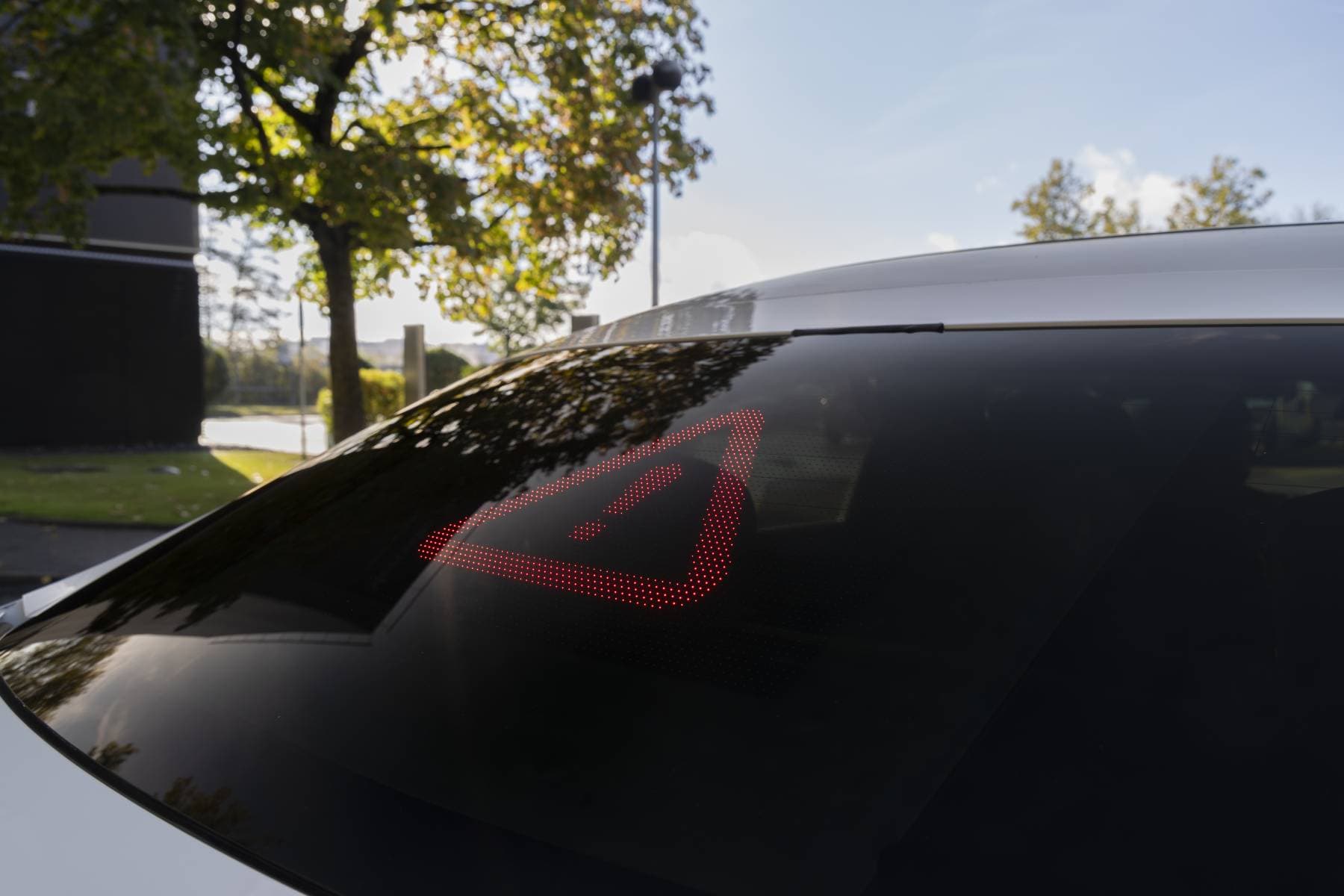
Car windows that double as displays: Mercedes-Benz is developing LED elements laminated into the glass that show warnings and traffic information to other road users, as well as a holographic display for the windshield. The company also presented a Power Converter for 800-volt electric vehicles. The following text was published by the Mercedes-Benz Group on 3 November 2026 and is reproduced here with minor editorial adjustments.
Innovation has been at the heart of the Mercedes-Benz DNA for 140 years. With new ideas and technologies, the company is continuously shaping automotive progress. The aim of every innovation is to offer customers genuine added value.
Intelligent display technology for communication and greater road safety
Safety is an essential part of the Mercedes-Benz DNA. The company is currently working on innovative display technologies that enable a new form of communication between the vehicle and its surroundings. LED display elements are integrated directly into the vehicle windows. For example, when required, the technologies can make warning signs, safety symbols, or traffic-related information selectively visible in the rear window. When no content is displayed, the display elements laminated into the glass composite remain almost invisible, blending harmoniously into the vehicle design.
Intelligent Display in Glass: the vehicle communicates with its surroundings using LED technology. (Image: Mercedes-Benz)
Innovative Holo Display: the windshield becomes a personalised communication surface. (Image: Mercedes-Benz)
Two specialised LED technologies enable different applications. Mini LEDs are particularly suitable for larger display areas such as the rear window. They can be used, among other things, to show brake lights, warning symbols or traffic information for the road users behind. Micro LEDs, meanwhile, offer high resolution and are therefore especially suited to sophisticated visual displays on smaller display areas, such as animations. Both solutions follow the approach that content appears only when needed and otherwise remains virtually invisible.
Digital displays in rear and side windows: the rear window warns other road users, the side window shows information such as the charging status. (Image: Mercedes-Benz)
Holographic display: the windshield becomes an on-demand communication surface
Mercedes-Benz is rethinking display surfaces. Instead of conventional screens, previously unused areas in the vehicle are being examined as potential information surfaces. The company is working on a holographic display that turns the windshield into a communication surface. A projector in the instrument panel projects content onto the windshield. A special transparent film laminated into the glass uses "holographic optical elements" (HOE) to selectively reflect the wavelengths of light emitted by the projector. This technology concentrates the light in such a way that the image remains visible even in sunlight. It is also visible only from specific viewing angles: the driver therefore cannot see what is shown on the passenger side – and vice versa. This opens additional information and entertainment possibilities, such as displaying context for POIs (points of interest), driving information or films. The new display is not permanently visible but shows content only when needed. This means the windshield can be used situationally for navigation, video calls, driving information or entertainment without permanently changing the vehicle's appearance.
"The future of mobility is not created through promises, but through precision and proven engineering excellence. With innovations that offer clear benefits in our customers' everyday lives, we are shaping the mobility of tomorrow – continuously, consistently and with a clear focus on the future."
— Ida Wolf, Vice President Development Innovations, Operations & Digitalisation, Mercedes-Benz AG
Innovative Power Converter: new perspectives for electric drive systems with currently up to 3 kW output for 800-volt applications
The Mercedes-Benz Power Converter is a technology for future electric vehicles that uses programmable micro-converters to control the energy flows of individual battery cells and provide a constant high-voltage output of up to 800 volts, regardless of the cells' state of charge or ageing. This could enable batteries and power electronics to be designed with significantly greater flexibility, efficiency and compactness in the future, while also supporting functions such as AC and DC conversion and bidirectional charging (e.g. Vehicle-to-Home or Vehicle-to-Grid). The current generation already delivers up to 3 kW of power and supports AC and DC applications.
The Power Converter thus opens new possibilities for the design of electric drive systems and charging functions in electric vehicles. The technology makes it possible to largely decouple the provision of the required high voltage from the battery architecture and instead generate it through software-controlled power electronics.
The Power Converter: 800 V technology with AC and DC charging functionality. (Image: Mercedes-Benz)
A particularly promising prospect is the modular use of the technology directly at the level of individual battery cells or cell groups. Multiple Power Converters connected in parallel regulate the energy flows individually and jointly provide a stable high-voltage DC output. This allows the overall power output to be flexibly adapted to different vehicle and system requirements. At the same time, the high-voltage output is no longer directly determined by the number of battery cells connected in series, but instead by the decentralised converters and their software-based control.
In future vehicle architectures, the Power Converter could combine several functions that are currently handled separately into a single hardware unit. The technology therefore creates new freedoms in the design of the battery and powertrain. It could improve range and efficiency and facilitate the modularisation of powertrains for battery-electric vehicles and plug-in hybrids.
Source: Mercedes-Benz Group – Innovative display solutions and intelligent high-voltage technology