
LEDs & Light Sources
Researchers Have Developed Next-generation Smart Textiles – Incorporating LEDs, Sensors, Energy Harvesting, and Storage
The international team, led by the University of Cambridge, have previously demonstrated that woven displays can be made at large sizes, but these earlier examples were made using specialised manual laboratory equipment. Other smart textiles can be manufactured in specialised microelectronic…
Published by LED professional ·
by Sarah Collins, University of Cambridge
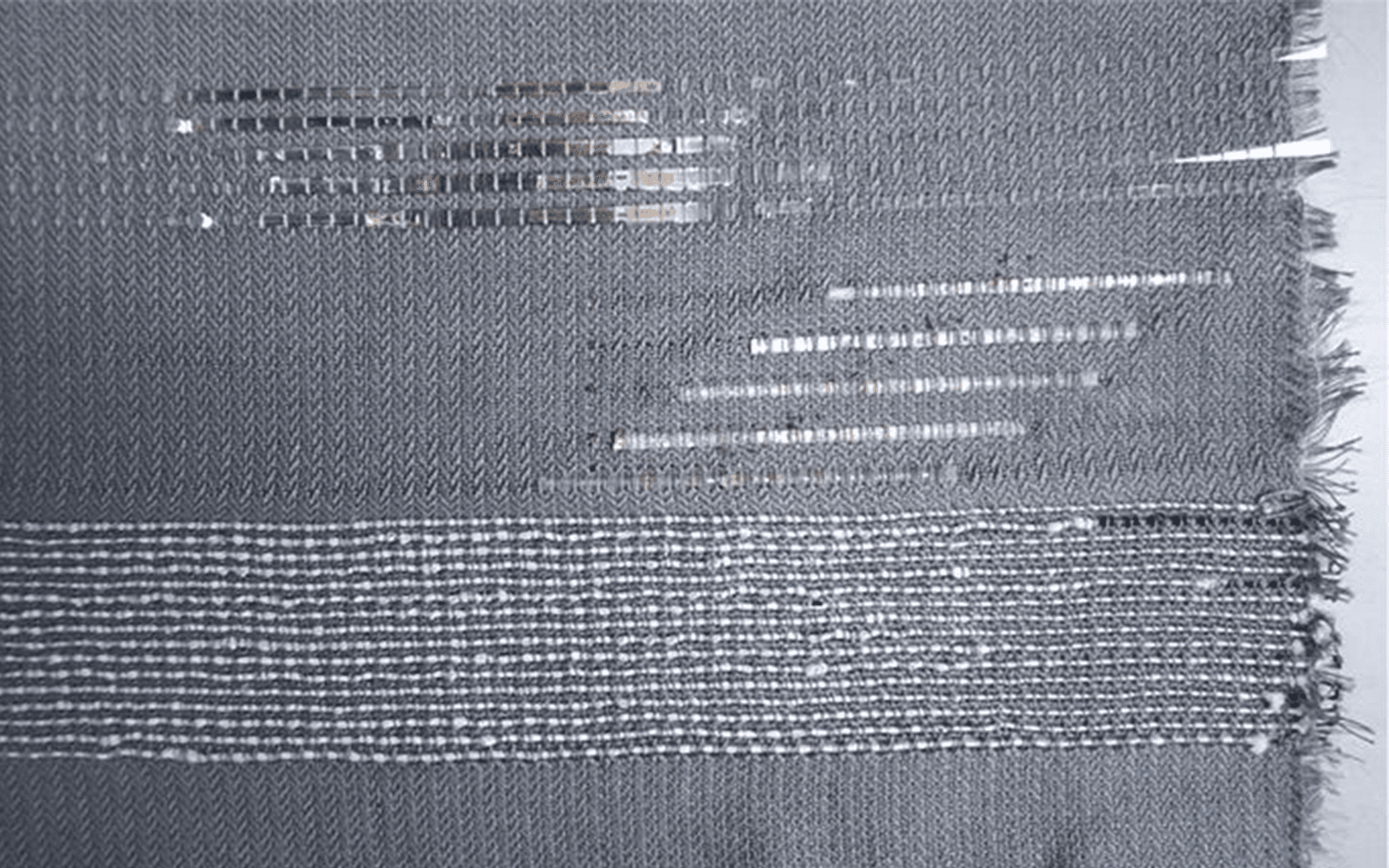
However, the team found that flexible displays and smart fabrics can be made much more cheaply, and more sustainably, by weaving electronic, optoelectronic, sensing and energy fibre components on the same industrial looms used to make conventional textiles. Their results, reported in the journal Science Advances, demonstrate how smart textiles could be an alternative to larger electronics in sectors including automotive, electronics, fashion and construction.
Despite recent progress in the development of smart textiles, their functionality, dimensions and shapes have been limited by current manufacturing processes.
“We could make these textiles in specialised microelectronics facilities, but these require billions of pounds of investment,” said Dr Sanghyo Lee from Cambridge’s Department of Engineering, the paper’s first author. “In addition, manufacturing smart textiles in this way is highly limited, since everything has to be made on the same rigid wafers used to make integrated circuits, so the maximum size we can get is about 30 centimetres in diameter.”
“Smart textiles have also been limited by their lack of practicality,” said Dr Luigi Occhipinti, also from the Department of Engineering, who co-led the research. “You think of the sort of bending, stretching and folding that normal fabrics have to withstand, and it’s been a challenge to incorporate that same durability into smart textiles.”
Last year, some of the same researchers showed that if the fibres used in smart textiles were coated with materials that can withstand stretching, they could be compatible with conventional weaving processes. Using this technique, they produced a 46-inch woven demonstrator display.
Now, the researchers have shown that smart textiles can be made using automated processes, with no limits on their size or shape. Multiple types of fibre devices, including energy storage devices, light-emitting diodes, and transistors were fabricated, encapsulated, and mixed with conventional fibres, either synthetic or natural, to build smart textiles by automated weaving. The fibre devices were interconnected by an automated laser welding method with electrically conductive adhesive.
The processes were all optimised to minimise damage to the electronic components, which in turn made the smart textiles durable enough to withstand the stretching of an industrial weaving machine. The encapsulation method was developed to consider the functionality of the fibre devices, and the mechanical force and thermal energy were investigated systematically to achieve automated weaving and laser-based interconnection, respectively.
The research team, working in partnership with textile manufacturers, were able to produce test patches of smart textiles of roughly 50x50 centimetres, although this can be scaled up to larger dimensions and produced in large volumes.
“These companies have well-established manufacturing lines with high throughput fibre extruders and large weaving machines that can weave a metre square of textiles automatically,” said Lee. “So when we introduce the smart fibres to the process, the result is basically an electronic system that is manufactured exactly the same way other textiles are manufactured.”
The researchers say it could be possible for large, flexible displays and monitors to be made on industrial looms, rather than in specialised electronics manufacturing facilities, which would make them far cheaper to produce. Further optimisation of the process is needed, however.
“The flexibility of these textiles is absolutely amazing,” said Occhipinti. “Not just in terms of their mechanical flexibility, but the flexibility of the approach, and to deploy sustainable and eco-friendly electronics manufacturing platforms that contribute to the reduction of carbon emissions and enable real applications of smart textiles in buildings, car interiors and clothing. Our approach is quite unique in that way.”
The research was supported in part by the European Union and UK Research and Innovation.
Reference:
Sanghyo Lee et al. ‘Truly form-factor-free industrially scalable system integration for electronic textile architectures with multifunctional fiber devices.’ Science Advances (2023). DOI: 10.1126/sciadv.adf4049




