
Technology
Prof. Shuji Nakamura's Blueprint for a Brighter Tomorrow
In his commentary, Nobel laureate Prof. Shuji Nakamura outlines a vision for lighting that combines energy efficiency, smart controls, Li-Fi, and human-centric design. He explores how innovation can support health, productivity, and sustainability while making technology more accessible and contributing to global cooperation.
Published by LED professional · · Updated
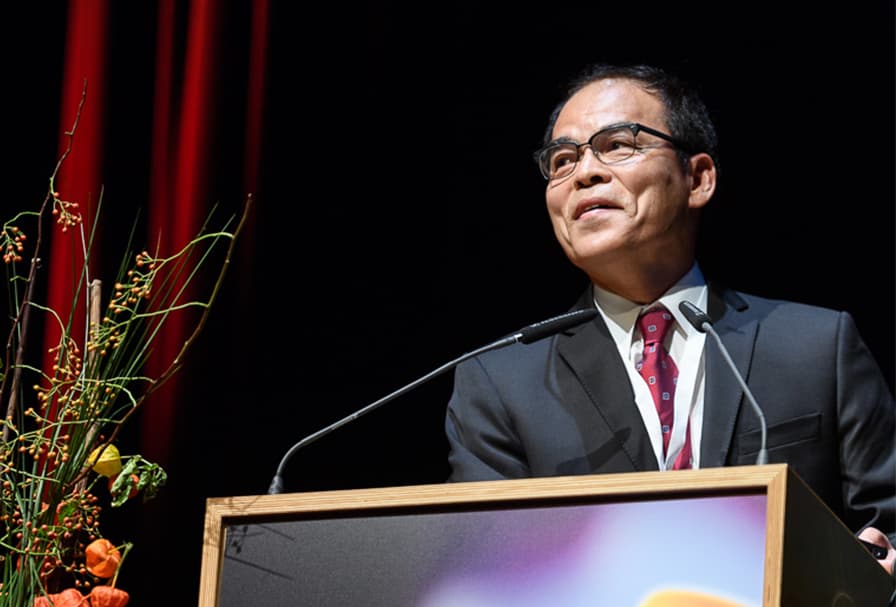
In the realm of lighting, the future is not just bright; it's transformative. Having dedicated a significant portion of my life to the development and enhancement of lighting technologies, I've witnessed firsthand the evolution from incandescent bulbs to the revolutionary blue LED lights. As we stand on the cusp of another decade, I'd like to share my insights into the future trends in lighting and my overarching goals in this domain.
The world is rapidly transitioning to sustainable and energy-efficient solutions. Lighting, responsible for a significant portion of the world's electricity consumption, is no exception. The invention of the blue LED was a pivotal moment, not just for its ability to produce white light when combined with phosphors, but for its energy efficiency. LEDs consume a fraction of the power of traditional bulbs, and their longevity means reduced waste. But the journey doesn't stop here.
The next frontier in lighting is the integration of smart technologies. Imagine lights that adjust their brightness and color based on the time of day, enhancing our circadian rhythms and improving our overall well-being. Or streetlights that can detect oncoming traffic and adjust their intensity accordingly, ensuring safety while conserving energy. These are not mere fantasies but tangible realities in the making.
Another promising avenue is the fusion of lighting with data transmission. My team's work on lasers has shown that light can be used for high-speed data transmission, a concept known as Li-Fi. As the world becomes increasingly connected, integrating data transmission capabilities into everyday lighting can revolutionize how we access and share information.
From a broader perspective, the future of lighting is not just about illumination. It's about creating holistic environments. Lighting will play a pivotal role in shaping our moods, enhancing our productivity, and even improving our health. The potential applications are boundless, from medical therapies using specific light wavelengths to agricultural practices optimized with tailored light recipes.
My overarching goal has always been to enhance human life through technological innovation. The blue LED was a testament to this vision, transforming industries and paving the way for sustainable lighting solutions. As we move forward, my focus remains on pushing the boundaries of what's possible, ensuring that lighting solutions are not only efficient but also holistic, catering to the multifaceted needs of humanity.
In conclusion, the future of lighting intertwines innovation, sustainability, and human-centric design. As technology rapidly advances, coupled with a deeper grasp of human needs, I am hopeful for transformative lighting developments that reshape our interaction with our environment. My enduring mission is to lead this evolution, catalyzing change and lighting the way forward. Amidst global challenges, I hold that technology, even in sectors as specific as lighting, should champion peace and unity. Our world grapples with diverse issues, from political tensions to environmental threats. Lighting, though seemingly niche, holds immense potential to bridge these divides. It can address energy disparities, curb carbon emissions, and boost economic growth in marginalized areas. By making sustainable technologies accessible, we light up homes and lay foundations for global understanding, collaboration, and peace. My vision transcends lighting; it's about leveraging innovation to foster a cohesive global society. S.N.
Note: This commentary was originally published in LpR#100, anniversary issue.
About the Author
Prof. Shuji Nakamura is a globally recognized pioneer in the field of semiconductor technology, best known for his invention of the blue LED. Born in Ehime, Japan, in 1954, Nakamura's groundbreaking work has revolutionized lighting technology, paving the way for energy-efficient and sustainable lighting solutions. His blue LEDs, combined with red and green counterparts, have transformed electronic displays, leading to the development of white LEDs and blue laser diodes, which underpin Blu-ray technology.
Nakamura's contributions have earned him numerous accolades, including the 2014 Nobel Prize in Physics. Beyond his technical achievements, he has been a staunch advocate for inventors' rights and has championed the cause of sustainable and efficient lighting. Currently, he serves as a professor at the University of California, Santa Barbara, continuing his research and inspiring the next generation of innovators.




