
Regulations
New Standards from IES
The Illuminating Engineering Society (IES) recently introduced four new standards documents addressing current challenges that face the lighting industry – navigating near-field photometry, standardizing iterations of lighting controls intent, the importance of UV lighting, and promoting a…
Published by LED professional ·
Recommended Practice: Lighting Exterior Applications (ANSI/IES RP-43-22)
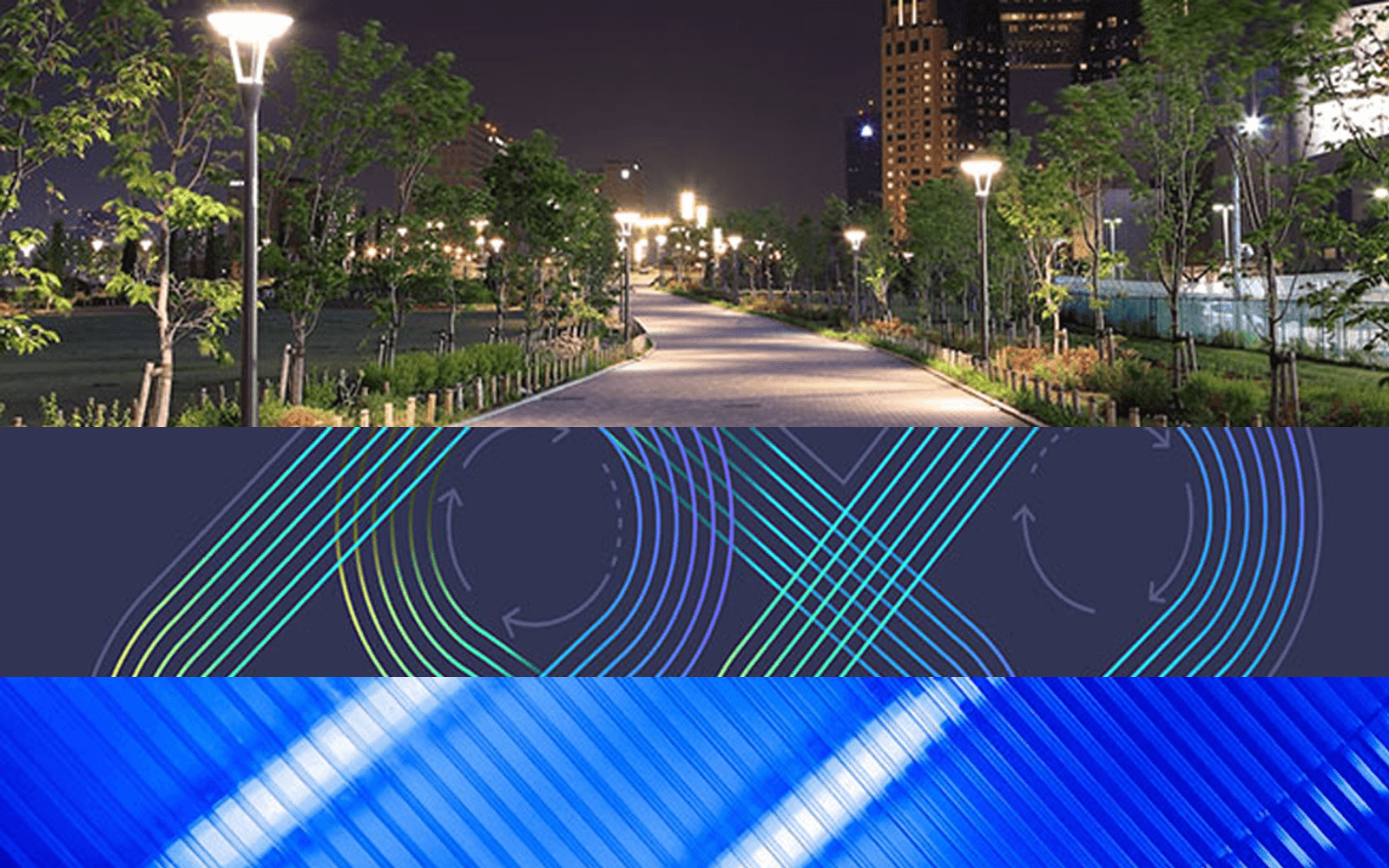
This document provides pedestrian-oriented illumination recommendations for the reassurance, safety, comfort, amenity, and enjoyment of people in outdoor environments. This RP takes a comprehensive approach and makes recommendations based on lighting zone, glare avoidance, spectrum, and other visually influential conditions. Application of these recommendations will ultimately enhance the visual experience for people, while also respecting the environment.
Lighting Practice: Documenting Control Intent Narratives and Sequences of Operation (ANSI/IES LP-16-22)
Intended for a variety of users in the lighting community, this document provides guidance on the documentation of Control Intent Narratives and Sequences of Operation. It is not intended to be a design guide, but rather a reference manual of best practices on how the design, once formulated, is included in the project documentation and communicated to the construction and commissioning teams.
Approved Method: Application Distance Radiometry (ANSI/IES LM-91-22)
In near-field conditions, the use of far-field IES-format photometric files results in substantially incorrect irradiance, illuminance, or photon-flux density values being predicted by lighting layout models constructed for near-field conditions. This problem can be overcome by using distance-specific IES file(s), generated by first collecting data at the working distance(s) of interest obtained from a single luminaire and then converting them to distance-specific IES file(s), following the protocol described in this document.
Approved Method: Optical and Electrical Measurement of Ultraviolet LEDs (ANSI/IES/IUVA LM-92-22)
This document is a guide developed for the measurement of ultraviolet (UV) light emitting diodes (LEDs) and describes the procedures to be followed and precautions to be observed in performing measurements of total radiant flux (total radiant power), electrical power, and wavelength characteristics of ultraviolet (UV) light emitting diodes (LEDs).
“The IES is committed to developing standards that address important and timely factors that influence the practice of quality lighting,” says Brienne Musselman, IES director of education and standards. “As always, we are grateful to the contributors who helped develop these documents. Professional rigor remains a priority for us, and these standards represent an important step to solve the issues facing our community.”
ABOUT THE ILLUMINATING ENGINEERING SOCIETY (IES)
Established in 1906, the Illuminating Engineering Society is the recognized technical and educational authority on illumination. Our mission is to improve the lighted environment by bringing together those with lighting knowledge and by translating that knowledge into actions that benefit the public. We provide a variety of professional development, publications, networking and educational opportunities to our membership of engineers, architects, designers, educators, students, contractors, distributors, utility personnel, manufacturers and scientists in nearly 60 countries. Through our American National Standards Institute (ANSI) accredited process, we publish and maintain the Lighting Library®, with over 100 standards written by subject matter experts in our technical committees. In all our efforts, we strive to improve life through quality of light. To learn more about us, visit www.ies.org.




