
LEDs & Light Sources
Direct Current (DC) Power Solutions for LED Lighting Systems
Our built environment plays a crucial role in determining the quality of energy we consume. As the nation invests in grid modernization and resiliency, there is a growing emphasis on electrification, renewable energy integration, and carbon reduction. With this, Direct Current (DC) power is key to…
Published by LED professional ·
While Alternating Current (AC) has traditionally dominated our built environment, the use of DC power is rapidly expanding. From renewable energy sources and electric vehicles to mobile devices and IT networks, DC power is already prevalent and continuing to grow.
Converting AC to DC power results in efficiency losses and potential failure points for connected devices and systems. However, direct DC power connection to renewable energy sources, combined with DC-powered building systems, has been proven to generate significant energy savings compared to AC-powered buildings. Recognizing the potential of DC power, the US Green Building Council has introduced a LEED® credit for Direct Current Power Systems and consideration for DC-powered systems under its LEED Zero certification.
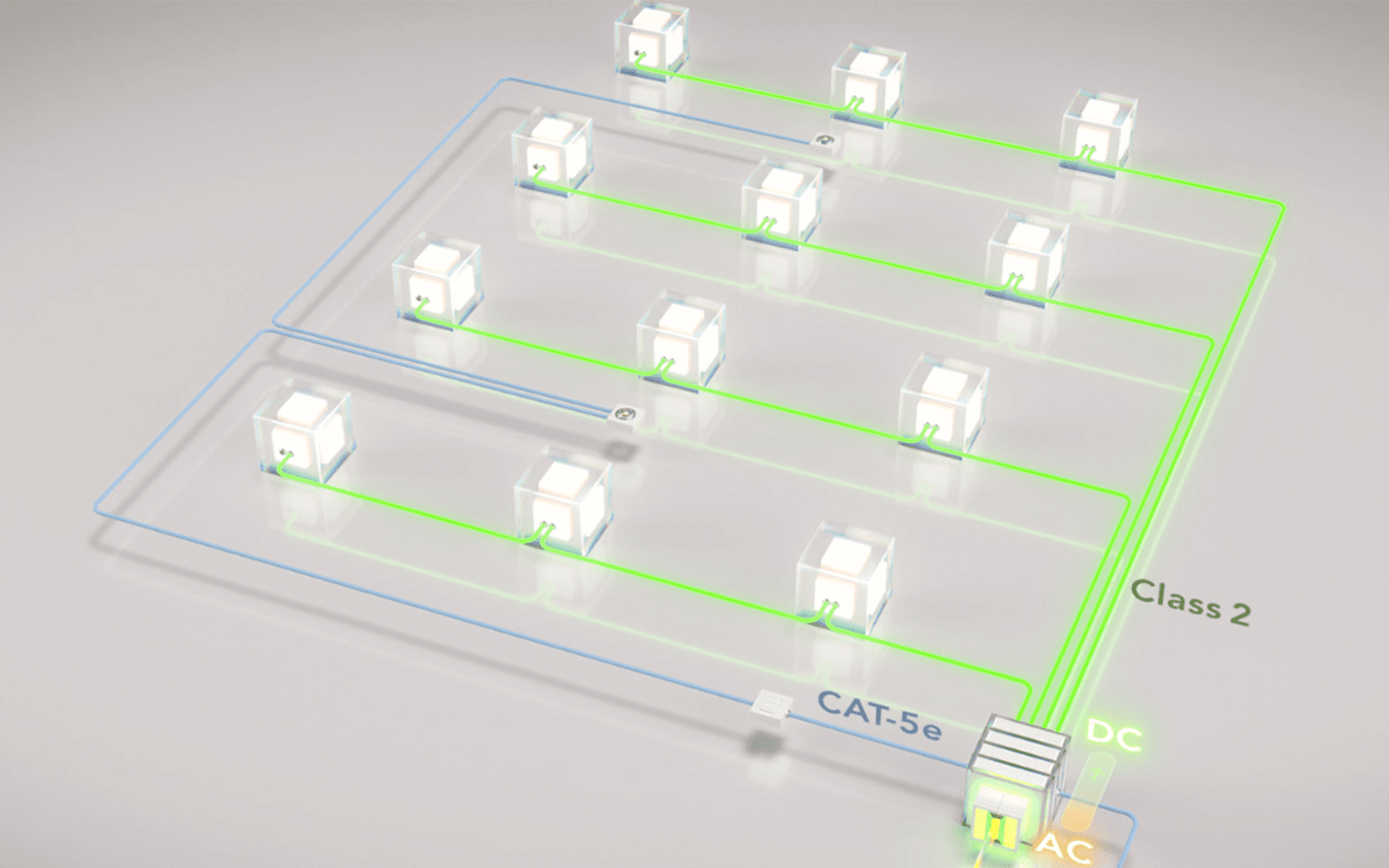
Acuity Brands' innovative DC2DC architecture provides a distributed DC power solution for LED lighting systems, revolutionizing their efficiency and sustainability. By eliminating the need to convert AC to DC power at the luminaire, the architecture reduces energy losses and enhances the reliability of lighting systems. This not only lowers maintenance and operation costs but also contributes to overall energy savings and sustainability goals.
The DC2DC architecture is ideal for new construction spaces like classrooms, where both energy efficiency and occupant comfort and well-being are critical factors. It allows for up to 16 lighting zones or up to 8 lighting zones with tunable white, which promotes an intellectually stimulating and comfortable environment, aligned with key classroom activities.
Energizes lighting design for student and teacher well-being.
The DC2DC architecture’s control cabling and DC powered LED drivers provide native support for tunable white applications enabling the creation of scenes and modes that can be aligned with key activities during the day.
Empowers flexible lighting control design and “flex space” configuration.
Luminaires can be individually controlled or grouped in zones, and installation time can be further reduced by leveraging embedded occupancy and daylight sensors within luminaires. Classroom spaces can be reconfigured, and lighting control zones customized, without the need and cost of rewiring.
Reduces materials and installation hours and facilitates maintenance.
Utilization of Class 2 low voltage DC wiring eliminates the need for power packs, junction boxes, and conduit to luminaires, providing reductions of both materials and related installation hours, and contributing to a reduction in construction carbon footprint. The DCHUB is a single point of AC to DC power conversion and luminaire control interface, reducing points of maintenance.
Integrates for a unified building approach.
The DC2DC architecture can be used within a hybrid implementation of DC and AC powered lighting systems within one building. It is part of a unified platform through nLight networked controls, enabling building-wide control and lighting strategies.
To learn more about the DC2DC architecture and its benefits, visit this website.




